
M.Sc. Hans Stenglein

Resilient control design for electrical power systems
+49 (0) 6151 16-21719
fax +49 (0) 6151 16-21712
S3|10 310
Landgraf-Georg-Str. 4
64283 Darmstadt
Research Interest
Research Interest:
- cyber-physical systems, electrical power systems
- distributed control
- sensor placement, structured controller design
- complex systems, network science
- resilience
Research Project:
Electrical power systems are a critical infrastructure and their vulnerability is mainly driven by the strong physical coupling of all components. Electrical power system failures lead to serious societal consequences.
Crisis events, such as line outages due to overloading, winter storms or cyber attacks, change the underlying physical network structure. Resilience against physical changes demands for either largely over-sized system components or an adaption of the automated control system.
The research project investigates the complementary couplings in the physical and the cyber (communication + control algorithms) domain of electrical power systems. Considered events are mainly line outages and system splits. The project aims to develop analysis and synthesis methods that enable designers to build medium scale power systems which function on their own, even after a crisis event.
Open theses
Supervisor: Hans Stenglein
Earliest start: immediately
Type: Master Thesis
Graph partitioning is a fundamental problem with applications in scientific computing, VLSI design, network analysis, and data mining. Over the years, numerous algorithms and libraries have been developed to address this problem family. These approaches typically optimize for one standard objectives, i.e. minimizing the cut size, and under a standard constraint, i.e. producing partitions of roughly equal size.
While well-studied and effective in many applications, for power network system split generation one has to consider different objectives and constraints, such as power (im-)balance, required ancillary services, or power flow feasibility. It remains unclear how established graph partitioning algorithms perform when used to anticipate power systems system split scenarios, and if and how such algorithms could best be adopted.
The work is supposed to identify limitations of standard methods and libraries applied to power system splits and the work should develop possible adaptions to use them for power system applications.
Tasks
- Develop procedures to adapt standard algorithms for power system specific partitioning (e.g. domain specific coarsening, iterative changes of edge cut weights).
- Discuss trade-offs between solution quality, constraint satisfaction, and computational complexity / realistic runtimes / scalability. Evaluations should be conducted on transmission system testcases.
Supervisor: Hans Stenglein
Earliest start: immediately
Type: Master Thesis
We ask: How do different MILP formulations describing graph partitions perform when included into network design problems with planning and operational constraints?
The aim of the proposed work is to compare different MILP formulations calculating system splits with constraints and objectives uncommon in the mathematical programming literature, but relevant to power systems (graph partitionings with power systems related constraints). The work should identify the fastest to solve formulation for small example networks.
Further, their usefulness as component of a multilevel optimization program should be evaluated, where resolving with changed right-hand side (upper level decisions) is common.
The work is expected to perform the following tasks:
-
Basic cut / connectivity model and solution quality
- Understand and implement multi-component connectivity / max k-way cut MILP formulations from the literature (virtual flows, representatives)
-
Compare the fit of the basic models to power systems related constraints
-
Analyze resulting model sizes and possible synergies with submodels for
power-system-specific objectives and constraints, especially
- Objectives other than cut size (number of edges removed), using the cut size as a constraint
- Unknown, but limited number of islands / partitions
-
Analyze resulting model sizes and possible synergies with submodels for
power-system-specific objectives and constraints, especially
- Test the solve times and robustness of the formulations against parameter changes on the same graph, i.e. upper-level decisions
The work can be done as a Master Thesis or Project Seminar.
Required Background Knowledge and Skills
- Graph theory basics
- Power system basics (operation, dispatch)
- Good (scientific) programming skills (preferred languages: Julia, Python; GAMS, Matlab is possible)
- Mixed Integer Linear Programming
- Attendance in lecture "Energy management & Optimization" could be helpful
Literature
- Hojny, C., Joormann, I., Lüthen, H., & Schmidt, M. (2021). Mixed-integer programming techniques for the connected max-k-cut problem. Mathematical Programming Computation, 13(1), 75–132.
- Healy, P., Jozefowiez, N., Laroche, P., Marchetti, F., Martin, S., & Róka, Z. (2024). A branch-and-cut algorithm for the connected max-k-cut problem. European Journal of Operational Research, 312(1), 117–124.
- Dena-Studie Systemsicherheit 2050. (2020). Deutsche Energie-Agentur.
Short Bio
Hans started his academic journey after graduating from a high school with engineering courses.
He started his studies in information systems engineering with focus on optimization and control. During his Master's degree programme, he specialized in power engineering and embedded systems design. Parallel to his M.Sc. courses, he studied philosophy and history of technology.
- since 2024: Research Associate at EINS
- 2023: M.Sc. Informationssystemtechnik (information systems engineering), TU Darmstadt
Publications
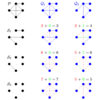
[Journal]
Andrew Eliseev, Hans Stenglein, Florian Steinke:
Minimizing Worst-Case Cyber Graph Reconfigurations in Resilient Cyber-Physical Systems.
In: IEEE Control Systems Letters 9 , P. 733-738, 2025
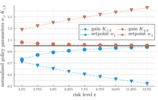
[Conference]
Hans Stenglein, Timm Faulwasser, Florian Steinke:
Robust and Chance-Constrained Dispatch Policies for Linear Power Systems.
In: 12thIFAC Symposium on Control of Power and Energy Systems (CPES 2024), Rabat, Morocco, 2024